
Europe’s first V2G ecosystem in Utrecht
A collaboration between Renault Group, MyWheels, We Drive Solar, Municipality of Utrecht, and Last Mile Solutions.
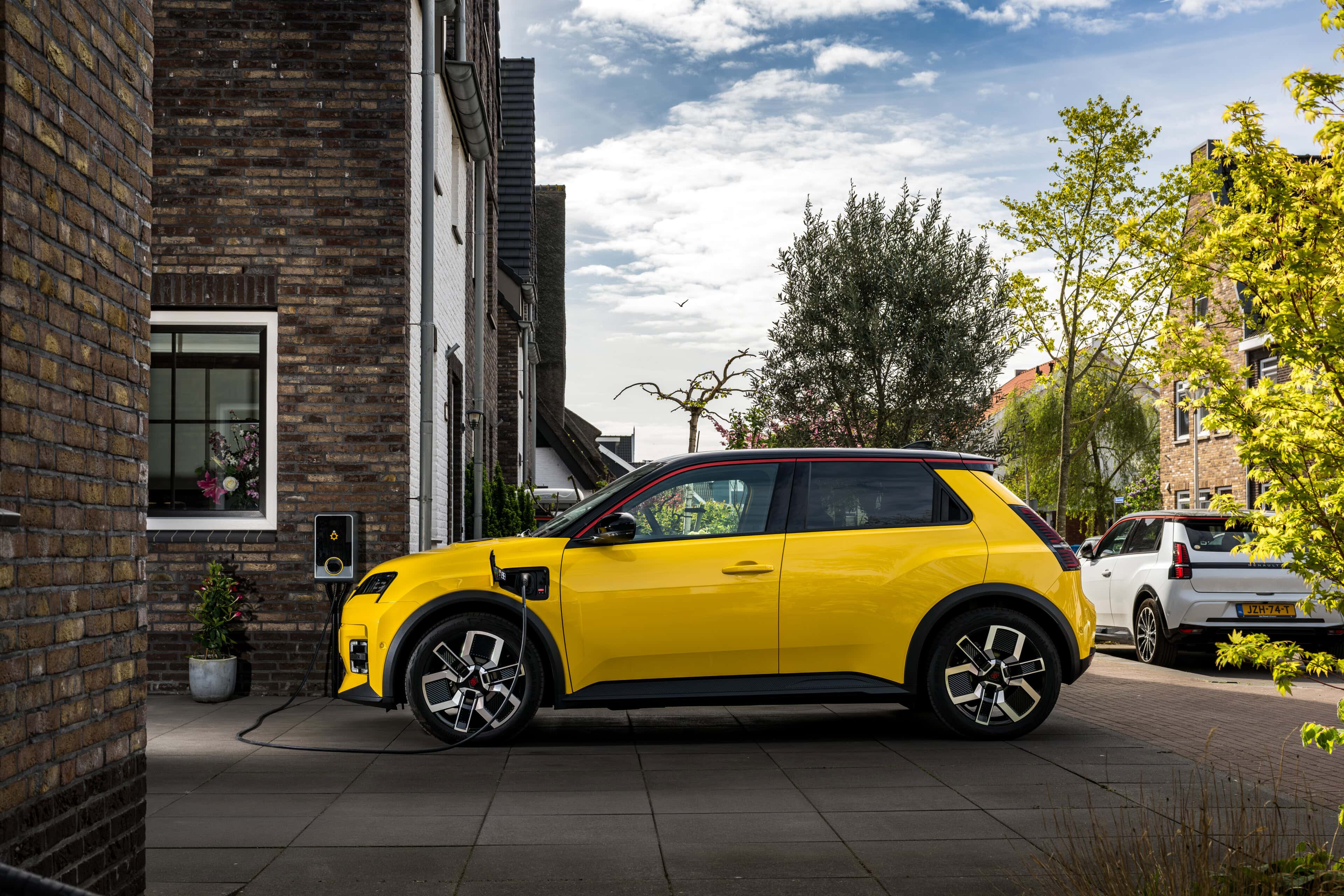

A vision for the future: decentralised, sustainable cities
In a future where electric mobility is the dominant mode of transport and decentralised energy plays a central role, success will depend on close collaboration between transport providers, charging infrastructure, insurers, grid operators, and urban planners to keep cities running efficiently and sustainably.
This vision is now a reality in Utrecht, the Netherlands, a forward-thinking city at the forefront of sustainability. In collaboration with Renault Group (via Mobilize), MyWheels, We Drive Solar, and Last Mile Solutions, Europe’s first large-scale V2G car-sharing service has gone live.
Urban energy & mobility challenge
Utrecht is leading the way in solar adoption: around 35% of rooftops are equipped with solar panels. But this success comes with a challenge: during peak sunlight hours, the city’s electricity grid experiences overloads. These overloads occur when solar energy production exceeds local consumption, particularly between 12:00 PM and 3:00 PM on sunny days.
This surplus energy is fed back into the grid, but the existing infrastructure cannot efficiently store or redirect this excess power. Consequently, the grid faces strain, with a peak shortfall of around 25 MW in the Utrecht region, leading to instability and increased costs for consumers.
The urgency is felt: the Province of Utrecht has halted all new grid connections and upgrades, and more provinces across the Netherlands and Europe are approaching the same constraints.

Collaborative innovation in Utrecht: the V2G Ecosystem
To address this challenge, Renault Group (via Mobilize), MyWheels, We Drive Solar, the Municipality of Utrecht, and Last Mile Solutions collaborated to launch Europe’s first large-scale vehicle-to-grid (V2G) car-sharing service – Utrecht Energized – which went live in April 2025.
The roll-out began with 50 Renault 5 E-Tech electric cars, available through MyWheels, the Netherlands’ largest car-sharing platform. These vehicles use V2G bidirectional charging technology developed by Mobilize and are charged via We Drive Solar’s Solar City bidirectional AC chargers. This marks the first time this technology has been made available for public infrastructure at this scale.
Last Mile Solutions’ smart charging and energy management platform, first introduced in a 2015 We Drive Solar project, is the midpoint of the system. It digitally connects and configures the charge stations to the grid, authorises charge sessions, manages energy flows, and processes all associated settlements and payment transactions. The platform maintains 99.99% uptime, ensuring mission-critical reliability across the entire ecosystem.
As of June 2026, the project is scaling to a full fleet of 500 bidirectional Renault 5 E-Tech cars supported by 500 bidirectional chargers, with the platform having processed more than 120,000 charging transactions to date.
“Utrecht shows how cities can do things differently. Thanks to Last Mile Solutions, smart chargers, and shared electric vehicles, we prove that renewable energy can efficiently power both homes and cars.”
— Robin Berg, Director at We Drive Solar

A full ecosystem, not just charging
What makes Utrecht Energized genuinely unique is that it is a complete V2G ecosystem, not just a charging deployment. We Drive Solar has developed an aggregation service based on MyWheels’ departure schedules and real-time hourly energy market prices (EPEX). This means cars are charged when electricity is cheap – overnight when there is wind, or during the day when solar generation peaks – and discharge back to the grid during evening demand peaks when prices rise.
Because car-sharing runs on reservations, MyWheels knows exactly when each vehicle needs to be fully charged. This predictability allows charging and discharging to be scheduled with precision, creating a viable business case for all partners.
For grid operator Stedin, the result is measurable congestion relief during peak hours.
Early results and technical impact
The Utrecht Energized network is now live and operational. Shared EVs are acting as mobile energy buffers, charging during peak solar hours and feeding electricity back when demand is high.
With the planned 500-car fleet, the system can relieve around 5 MW of grid congestion. While fully balancing Utrecht’s peak demand of 250 MW would require scaling to tens of thousands of EVs, the foundation has been laid.
Research from Utrecht University reinforces the approach: a 2020 study found that electric shared cars cause 50% less grid congestion than privately owned EVs, as car-share users charge differently and naturally avoid peak times.
Making sustainable cities real: Lessons from Utrecht
Utrecht is showing that cities can do things differently. With shared EVs, smart chargers, and the coordination expertise of Last Mile Solutions, renewable energy is a stable, scalable sustainability solution for urban environments.
The V2G ecosystem demonstrates how mobility providers, grid operators, urban planners, and tech partners can work together to make decentralised, sustainable cities a reality. Scaling up is now the priority: the cars and chargers can be delivered within months, meaning that with the right coordination, meaningful congestion relief is achievable within a year.
It’s just a first step, but an exciting one that points to what’s possible when everyone works as a team.